Imagine you’re standing on a hill looking out across a landscape of fields.
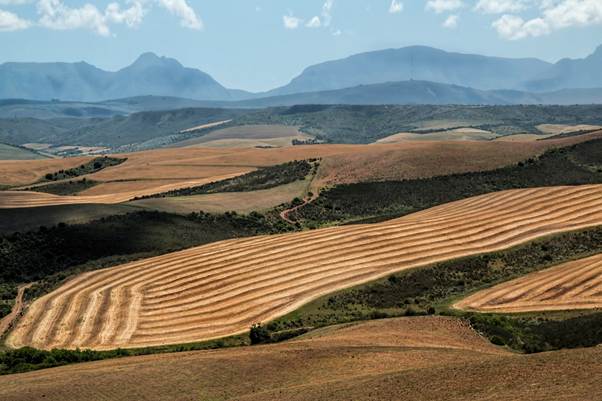
Somewhere below lies a Roman coin. Somewhere else, a medieval brooch. One field may even conceal a hoard of gold. Most contain very little.
From that hill, every field looks much the same. Back at your desk, they don’t.
The secret isn’t having sharper eyes. It’s asking better questions.
That’s why the most successful detectorists often spend more time with old maps, aerial photographs and local histories than they do swinging a detector.
The Great Myth of Metal Detecting
One of the biggest myths in metal detecting is that treasure can turn up anywhere.
Technically, it can. In practice, it rarely does. That’s the difference between possibility and probability.
A Roman coin could be found almost anywhere in Britain. A medieval brooch might appear in the most unexpected place. But could and probably will are very different things.
If you spend your weekends wandering randomly from field to field, you may eventually make an interesting discovery. If you choose your sites carefully, you’ll make interesting discoveries far more often.
After more than fifty years using a detector, I’ve reached a simple conclusion:
The best detectorists don’t find more because they search harder. They find more because they choose better.
The biggest difference between an average detectorist and a consistently successful one isn’t the detector they use. It’s the decisions they make before they ever switch it on.
Every Field Has a Story
Most people see a field.
I see a question.
Who lived here? Who travelled this way? Who worked this land? Who traded here? Who worshipped nearby? Who celebrated here? Who lost something they would dearly have liked to keep?
Those questions are far more important than wondering whether a detector will reach another inch deeper.
Metal objects do not normally arrive in a field by accident. People carried them, used them and eventually lost, discarded or deliberately deposited them there.
If people rarely visited a place in the past, there is usually little to find today. If generations of people lived, travelled, traded or gathered there, the chances of making worthwhile discoveries increase dramatically.
Reading the Landscape
Almost nothing in the landscape is accidental. Every road, boundary, field name and abandoned building tells part of a story. The challenge is learning to read that story.
Old maps. Field names. Ancient roads. River crossings. Forgotten mills. Deserted manors. Even an old newspaper report can reveal that hundreds of people gathered in a field for a single afternoon two hundred years ago.
Research is a little like detective work. One clue on its own may mean very little, but when several clues all point to the same place, they transform an ordinary field into somewhere genuinely exciting.
That’s why I often spend more time researching than detecting.
Research doesn’t guarantee success. Nothing can.
But it stacks the odds firmly in your favour.
The Invisible Skill
Every detector has a search coil.
The best detectorists have something even more powerful:
A mental filter.
Long before they set foot in a field, they have quietly eliminated dozens of others. Not because they’re lucky. Not because they’re psychic.
Because their research has already pointed the way.
Learning which fields not to search is one of the most valuable skills any detectorist can acquire.
Successful detecting doesn’t begin in the field.
It begins when you decide where to walk. The detector simply confirms the decision you’ve already made.
Continue Learning
This article introduces one of the most important ideas in successful detecting: choosing the right field before you even switch on your detector.
If you’d like to explore this and other aspects of the hobby, visit the Metal Detecting Guides & Tips page, where you’ll find articles organised by topic, including:
- Research & Preparation
- Field Techniques & Methods
- Responsible Detecting
- Health & Safety
- Advanced Skills & Interpretation
You’ll also find recommended books for each subject if you’d like to explore a topic in greater depth.
Recent Comments