Most detectorists think success comes down to finding the right field. In my experience, it often comes down to something else entirely—the decisions made in the first hour.
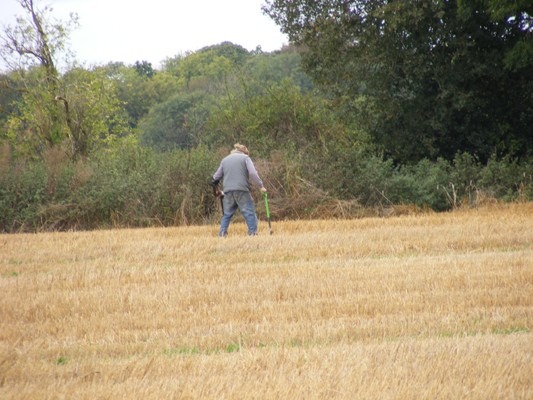
The Hour That Matters Most
Most finds aren’t lost because they aren’t there.
They’re lost in the first hour—when we make the wrong decisions.
I’ve learned this the hard way over many years. Time and again, I’ve walked onto ground that should have produced, only to leave thinking it was barren. Then, on a return visit—approached differently—it suddenly comes alive.
That first hour sets the tone. Get it right, and you begin to understand the site. Get it wrong, and you can walk away from good ground without ever realising it.
Where you’re allowed to detect varies across the world—permissions, public land, beaches—but the fundamentals of reading a new site are exactly the same.
This is what I actually do.
Before I Even Switch On
I don’t rush to switch the detector on.
Instead, I stand still for a moment and take the ground in. It’s surprising how much information is available before a single signal is heard.
I’m looking for simple things:
- Changes in soil colour
- Finds on the surface—pottery, flint, brick
- Slight rises or terraces
- Old trackways, gateways, worn routes
Even now, after all these years, I still see things in those first few minutes that shape the entire session.
If there’s nothing at all—no sign of past activity—I’m already cautious. Not defeated, but cautious.
Where I Start (And Why It’s Not Random)
I never start in the middle of a field.
Instead, I look for what I call activity zones:
- Field edges and boundaries
- Old entrances and gateways
- Areas near buildings (even vanished ones)
- Slightly higher ground
People rarely used land evenly. Activity clusters, and that’s what I’m trying to tap into early on.
If I can find a “live” patch in the first half hour, I know I’m on something worth pursuing.
The First Signals: What They Tell You
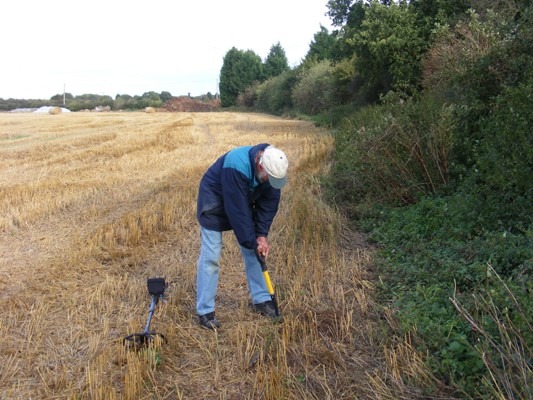
The first few signals are more important than many realise.
I’m not just interested in what they are—but in what they suggest.
- A scatter of iron can indicate occupation
- Lead often points to sustained activity
- Mixed signals suggest a worked area
- Complete silence is information too
I will dig more in the first hour than later on—not less. I’m sampling the ground, building a picture.
This is where many go wrong. They cherry-pick too early and miss what the site is trying to tell them.
Settings, Pace, and Control
I keep things simple at the start.
- Moderate sensitivity
- Minimal discrimination
- Slow, controlled sweep
This is not the time to push a machine to its limits. It’s about stability and clarity.
Just as important is pace. I slow myself down deliberately. The temptation is always to cover ground quickly—but in that first hour, understanding is more important than coverage.
The Decision Point: Stay or Move
By the end of the first hour, I expect to know one thing:
Is this ground worth my time today?
Not every good site produces every time. Conditions, crop, moisture—all play their part. But there should be something:
- A hint of activity
- A pattern forming
- A reason to persist
If there’s nothing—truly nothing—I’m prepared to move.
That’s not failure. It’s efficiency.
A Final Thought
Experience in metal detecting isn’t just about knowing where to go.
It’s about knowing how to start.
The first hour is where a site begins to reveal itself—or where we miss it entirely.
Get into the habit of treating that hour as reconnaissance, not routine, and you’ll find that more of your sites begin to “open up” in ways they never did before.
If you’d like more practical strategies like this, drawn from over 50 years in the field, you’ll find many of them explored in more detail in my books and guides on site research and successful detecting.
Recent Comments