I use Arcsoft Photostudio 5.5, as originally supplied with the Canon camera, for enhancing my aura photos. I have managed to keep this running on PCs up to and including Windows 7, although it does flash up a compatibility issue message at start-up. I haven’t found that to be a problem as long as I don’t use the browser function on Photostudio’s toolbar. In the past I had been told that version 6.0 did not work but I was recently told that a newer version 6.x did work. We did a few tests and sure enough I could not tell the difference between enhancing performed on 5.5 and that on the newer version, which can be downloaded free from: http://arcsoft-photostudio.en.softonic.com/
Infrared photo enhancing
The day I got my hands on a real gold bar
On a recent trip to London, my partner and I visited the Bank of England Museum. The signage wasn’t very clear, or perhaps I should have gone to Specsavers the opticians, and we actually ended up in the Bank of England itself at the first attempt. The security man, in pink frock coat and top hat, told us where to go and we found the museum entrance in Bartholomew Lane running off Threadneedle Street down one side of the Bank building.
The museum collections were interesting and varied, covering a range of objects related to the bank’s history since its founding in 1694. Coins and banknotes, as you would expect, plus books and documents, furniture, silver, paintings and statues. The part that fascinated me though was the 400 troy ounces 999.9 fine gold bullion bar that was held captive in a plexi-glass case but which allowed you to insert your hand to grasp and lift the bar a couple of inches. At approx. 21.5 kg or 27.5 lbs it is surprisingly heavy. The value of the bar flashes up on a screen in front of you: over £400.000/ $500,000 at today’s prices. Unfortunately I couldn’t figure out how to remove it from its case without anyone noticing!
Does anyone know how these treasure finding devices are used?
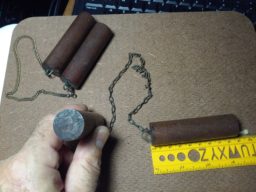
Victor Lewandowski writes: “I am having trouble finding information about the two treasure finding devices I have. I got them from my grandfather who used them probably sometime between 1900 and 1940 in Virginia USA.
They are 2 wood cylinders joined with brass chain. I was told they may contain mercury. From the picture you can see the end was drilled and filled with a heavy substance. I can’t find much on these devices. They seem to be a combination of dowsing and pendulum
I tested with one pair in each hand over a sterling silver ring, there was no reaction/crossing. I think each pair may be a separate device. They look like they were constructed by the same craftsman.
I weighed both pair of devices. The wooden filled cylinder of each pair weighed the same. One pair had a weight of 2.4oz. for each cylinder; the other pair had a weight of 2.6oz. Another observation is that the cylinders of one pair had the same lengths but there was a difference of 0.5cm between the other pair of cylinders (they were the same weight though). The chain of one device is 11.5in. in length and the second is 15in.
I did some more examination of the devices. I used a Minelab metal detecting pinpointer to check if there is a metal substance in the wood cylinders. The pinpointer detected a metal substance in each of the four cylinders. A volume of mercury can be detected as a metal.
“Like all metal targets mercury will read lower or higher depending on the size of the puddle of mercury. Mercury is only a fair conductor of electricity and so will read lower than similar size masses of silver or copper. For all intents it can be treated as a gold range target.” Steve Herschbach
The reasoning for the mercury in the cylinders was that there is a great affinity between gold and mercury. Historically mercury was used in mining to capture fine gold by forming an amalgam. Therefore I conclude that the builder of these devices thought that the mercury would move the cylinders towards a gold deposit. How to properly use the devices is baffling. Any help would be appreciated.”
I would add that a treasure hunting friend advised me to use mercury in an Earth Field Generator for locating gold. If anyone has any ideas at all on how these devices are or might be used, please email me and I will pass the information on to Victor.
Treasure of Charles I
Another major project of Jimmy Longton's was locating Charles I treasure in the Firth of Forth,
King John’s Treasure
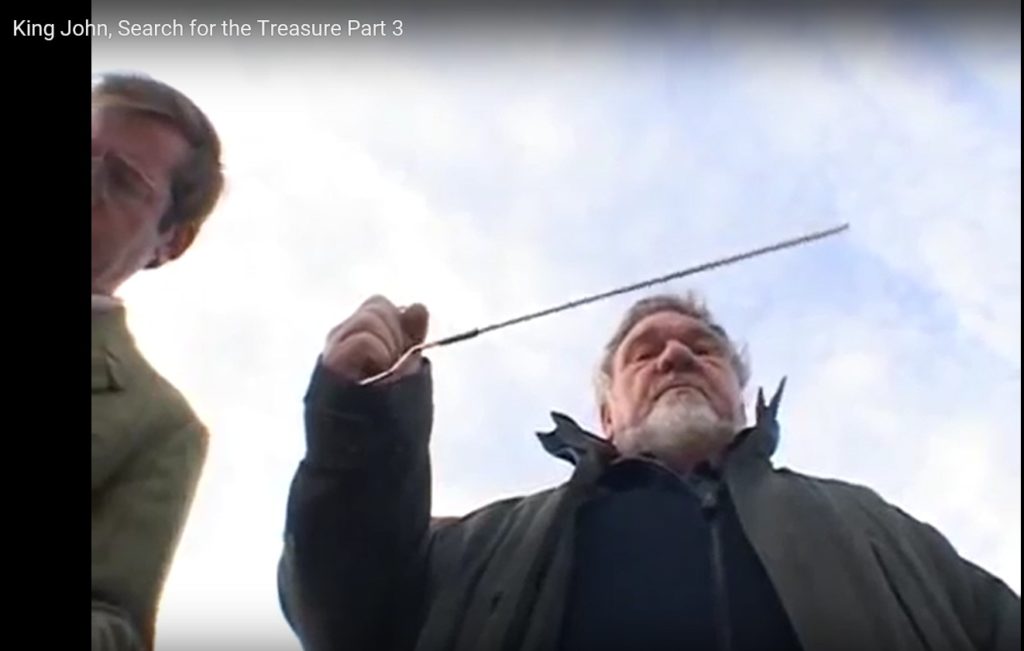
Continuing Jimmy Longton's search for treasure... In 1216 King John's court - contained in several large wagons laden with royal regalia - was crossing the River Wellstream, now part of the
https://www.youtube.com/watch?v=wgmew8Pg1ag https://www.youtube.com/watch?v=_iIrk9JqOrY https://www.youtube.com/watch?v=99lJRXDqd2c
Jimmy Longton
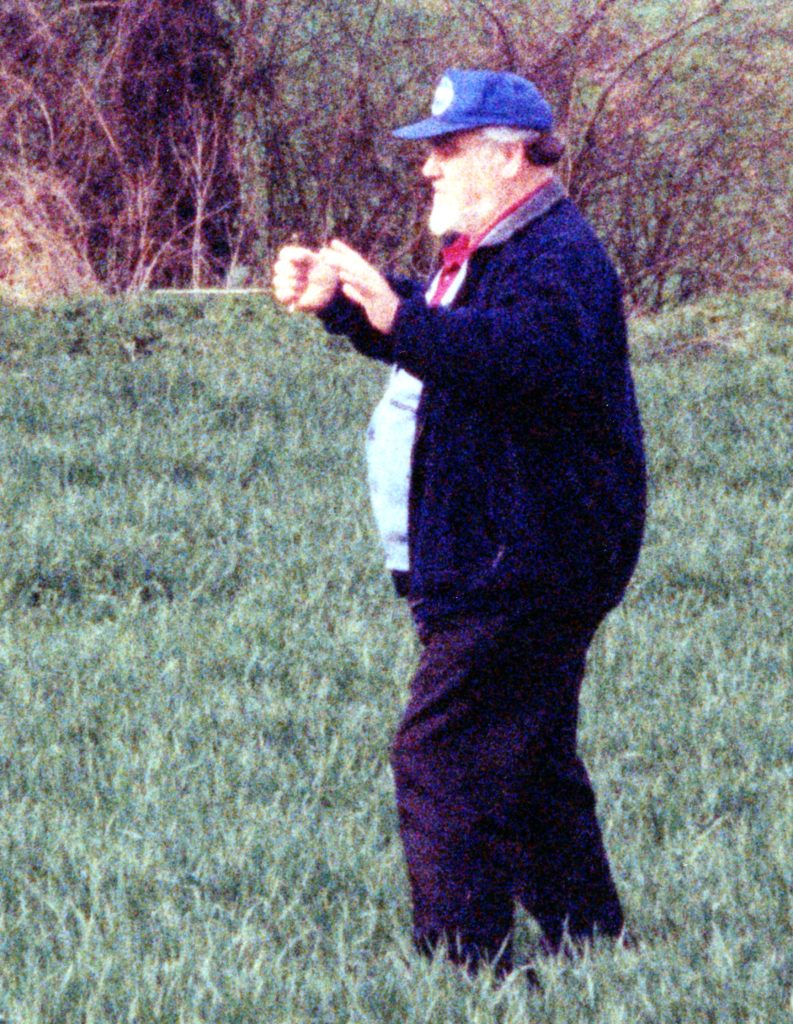
It is my sad duty to report that my good friend, Britain’s foremost treasure dowser, James (Jimmy) Longton, passed away suddenly on 02 May 2015 at the age of 84 years. He was buried in the churchyard of his home village of Euxton, (pronounced Exton) Lancashire, UK, on 15 May 2015 following a service at Euxton Parish Church attended by around 200 family and friends, myself included. Rest in Peace, Jimmy.
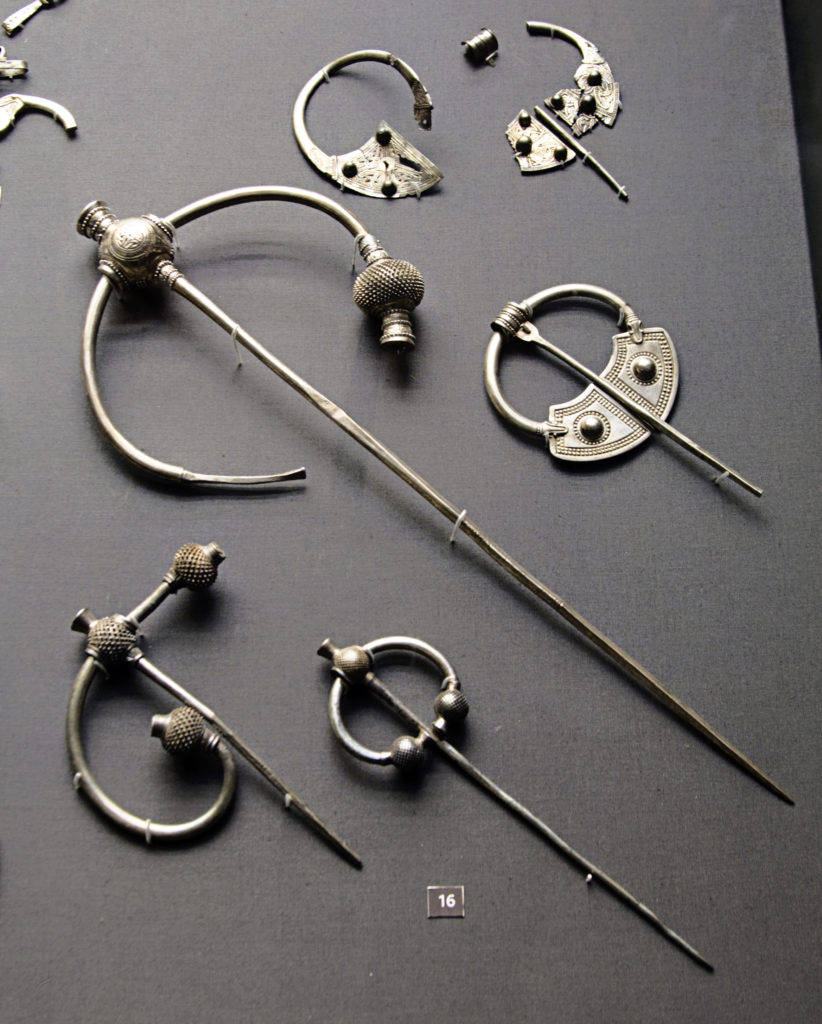
I could relate many tales of Jimmy’s exploits but I’ll just stick to his main achievements in treasure dowsing for now. Jimmy’s major claim to fame is his part in the finding of the Viking (c. 930 AD) silver brooch hoard near Penrith, Cumbria, in 1989. The two largest (i.e. longest) thistle brooches in the picture were found in 1785 and 1830 (largest) in a field called silver field. Jimmy and his friend Gerald Carter located and investigated the field in 1989 and recovered five more brooches, which were subsequently declared Treasure Trove. The award was more than £40,000 GB Pounds ($60,000 US Dollars)…
The Penrith Hoard in the British Museum Copyright 2010 Ealdgyth and reused under a Creative Commons Attribution-Share Alike 3.0 Unported license
Hot Mirrors
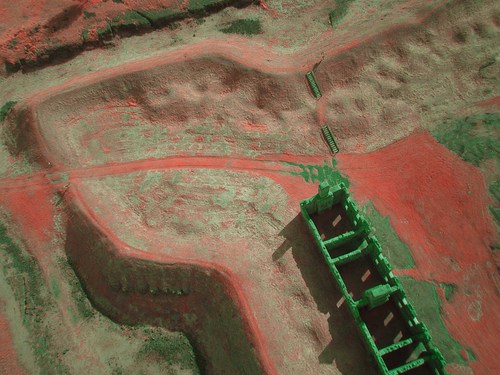
False color infrared image of 1759 British Fort at
I often get asked if the hot mirror should be removed from a digital camera to photograph auras. Digital cameras are as sensitive to near infrared radiation as they are to visible light, so ALL are fitted with an internal infrared blocking filter or hot mirror. If the hot mirror is removed the camera is HIGHLY UNLIKELY to photograph auras simply because it will flood with the full spectrum of infrared and we won't be able to see the infrared generated by buried metal. Removing the hot mirror does have an application for false color photography, which may show ground anomalies but this is very different to aura photography. For aura photography, what we are looking for is the older, lower specification digital camera, where the hot mirror is less efficient then the higher spec and more up to date camera and will allow enough infrared through to show an aura in the photograph.
I have invited treasure hunters and researchers to come forward with their tests on digital cameras for photographing auras but unfortunately I still have no reliable information on cameras other than Canon and
Orbs of Light
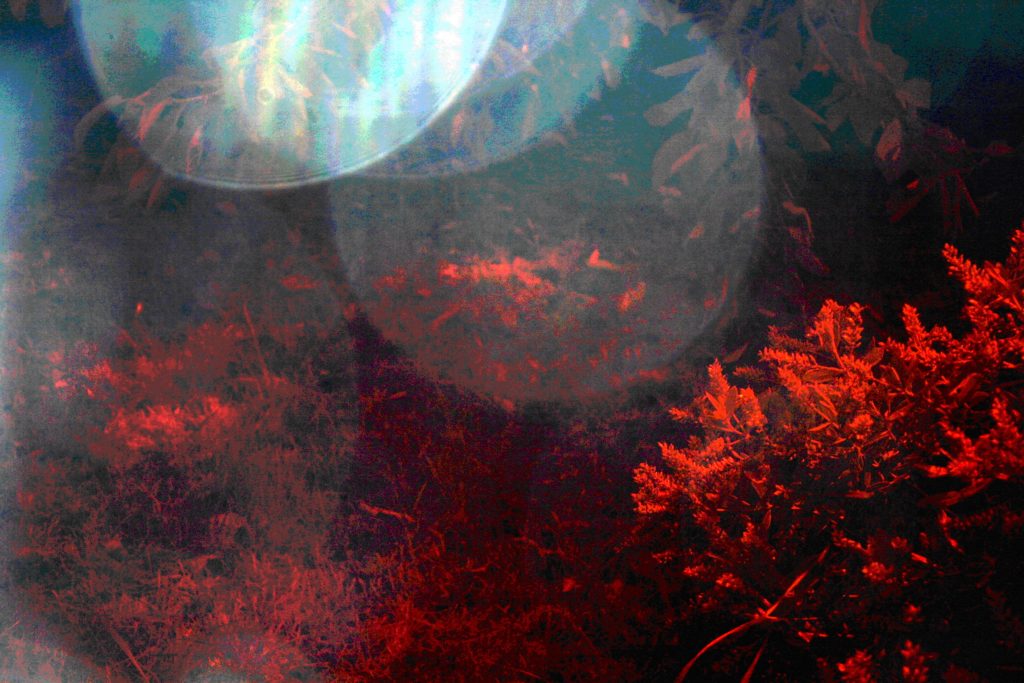
I get asked many questions about circles (spheres) of light or orbs some of which I can answer and some I can’t. While orbs have been seen on traditional emulsion film photographs they are mainly a phenomenon of digital photography. A digital camera has an internal ‘hot mirror’ or blocking filter to stop infrared radiation reaching the sensor and blurring the conventional photograph, as infrared focuses differently to visible light. I believe that on some (weaker) lenses the infrared is reflected back off the hot mirror onto the back of the lens and is photographed as an orb. Depending on the intensity of the infrared radiation, the reflection can bounce back and forth a number of times forming several orbs. The photo above was taken of a large target with a Canon EOS350D with standard lens and 720nm filter.
In comparison the same target was photographed above with the Sigma 105mm macro lens, which tends not to produce orbs, possibly because of the greater length of the lens.
Both photographs were taken during the investigation of a suspected treasure site. Unfortunately the landowners will only allow excavation by archaeologists. To go ahead in this manner would result in the finds effectively being confiscated and no reward payable.
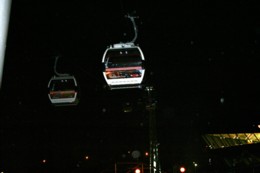
....There are other reasons for the formation of orbs other than buried metal and several books have been written about orbs claiming them to be manifestations from the spirit world. Two I have are The Orb Project and Orbs Their Mission and Messages of Hope, both co-authored by Klaus Heinemann, who is a doctor of physics. And here is a link to a website: http://paranormalresearchforum.net/2011/04/26/orbs/ There are many photos of orbs in the books, a few of which I can explain without reference to the spirit world. Apart from buried metal, there are a number of common generators of infrared, which can result in orbs such as light sources (sky), metal structures, animals and people. When taking photographs of potential treasure targets we should always avoid including any of these in the camera frame.
Here is an example. I took these evening pictures of the cable car across the river Thames in


Recent Comments